




Superior Biocompatibility
Zero metal exposure
Pure zirconia ceramic is hypoallergenic and chemically inert — eliminating the risk of metal ion release, galvanic reactions, or systemic immune challenges.

100% Ceramic-Exclusive Practice
Because excellence shouldn't compromise biology.
Ceramic-only implantology with uncompromising precision — no titanium, no compromise, no exceptions.
Ceramic-Only
Exclusive Practice
International
Patient Base
SDS & Zeramex
Certified Systems
IAOMT Accredited Biological Dentist • SMART Certified • SDS Advanced Training • Hürzeler-Zuhr Master Clinician • Dawson Academy Trained • 20+ years of experience






The Biological Advantage
Ceramic implants represent a fundamentally different paradigm in dental restoration — one designed to work in harmony with human biology rather than merely exist within it.
Zero metal exposure
Pure zirconia ceramic is hypoallergenic and chemically inert — eliminating the risk of metal ion release, galvanic reactions, or systemic immune challenges.

Invisible integration
Tooth-colored ceramic integrates seamlessly with natural dentition — maintaining translucency through gum tissue without the gray shadowing inherent to metal.

Superior plaque resistance
Smooth ceramic surfaces demonstrate significantly lower plaque retention than titanium, creating a cleaner peri-implant environment that supports long-term tissue health.

Healthier tissue integration
Ceramic promotes richer vascularization and more robust connective tissue attachment — establishing a biological seal that protects and nourishes.

Proven bone bonding
Modern surface-treated zirconia achieves predictable bone integration comparable to titanium when placed with appropriate surgical protocols.

Diagnostic friendly
Ceramic remains completely inert to electromagnetic frequencies and creates minimal MRI interference — preserving diagnostic clarity for lifelong imaging needs.
For patients with autoimmune conditions, metal sensitivities, or those committed to minimizing systemic burden, ceramic offers biological advantages that metal-based solutions cannot replicate. This is not merely a preference — it is a clinical imperative.
Material Comparison
Both materials work clinically. The question is which biological profile matches your health priorities.
ZrO₂ — yttria-stabilized zirconium oxide

Natural white color, metal-free composition, superior biocompatibility
Ti — grade 4/5 commercially pure titanium

Gray metallic appearance, may show through gums, extensive clinical track record
Category
Ceramic (Zirconia)
Titanium
Biocompatibility
Biologically inert — zero metal ions, no corrosion, hypoallergenic
AdvantageGenerally biocompatible, but metal ions release over time. Sensitivity concerns in some patients
ConsiderBiocompatibility
Ceramic (Zirconia)
Biologically inert — zero metal ions, no corrosion, hypoallergenic
AdvantageTitanium
Generally biocompatible, but metal ions release over time. Sensitivity concerns in some patients
ConsiderAesthetics
Natural white blends with teeth. No gray lines visible through gum tissue
AdvantageGray metal can show through thin gums, especially in the smile zone
Aesthetics
Ceramic (Zirconia)
Natural white blends with teeth. No gray lines visible through gum tissue
AdvantageTitanium
Gray metal can show through thin gums, especially in the smile zone
Bacterial adhesion
Superior plaque resistance. Lower documented risk of peri-implantitis
AdvantageHigher plaque accumulation. Bacterial colonization at the implant-abutment interface
Bacterial adhesion
Ceramic (Zirconia)
Superior plaque resistance. Lower documented risk of peri-implantitis
AdvantageTitanium
Higher plaque accumulation. Bacterial colonization at the implant-abutment interface
Soft tissue response
Enhanced blood flow and vascularization around the implant
AdvantageStandard response. Reduced vascularization compared to ceramic
Soft tissue response
Ceramic (Zirconia)
Enhanced blood flow and vascularization around the implant
AdvantageTitanium
Standard response. Reduced vascularization compared to ceramic
MRI compatibility
Completely inert to electromagnetic fields. Minimal MRI artifacts
AdvantageCan produce electromagnetic interference and significant MRI distortion
MRI compatibility
Ceramic (Zirconia)
Completely inert to electromagnetic fields. Minimal MRI artifacts
AdvantageTitanium
Can produce electromagnetic interference and significant MRI distortion
Corrosion resistance
Absolute zero corrosion — chemically inert ceramic oxide
AdvantageMinimal corrosion normally, but galvanic reactions possible with other metals in the mouth
Corrosion resistance
Ceramic (Zirconia)
Absolute zero corrosion — chemically inert ceramic oxide
AdvantageTitanium
Minimal corrosion normally, but galvanic reactions possible with other metals in the mouth
Clinical track record
Newer evidence base. Rapidly growing body of long-term studies
Decades of clinical data. The established gold standard by volume
EstablishedClinical track record
Ceramic (Zirconia)
Newer evidence base. Rapidly growing body of long-term studies
Titanium
Decades of clinical data. The established gold standard by volume
EstablishedThis comparison reflects peer-reviewed evidence and is provided for educational purposes. Individual clinical suitability should be assessed during your consultation.
Our Story
Most dental practices dabble. They do a bit of everything. Metal here, ceramic there. Whatever the patient asks for.
We don't.
Placing ceramic implants — and nothing else — year after year taught us that mastery comes from focus, and from doing the right thing the same way, every time.
This isn't for everyone.
But if you're looking for ceramic implants, wouldn't you rather work with someone who lives and breathes this stuff?
Your Journey
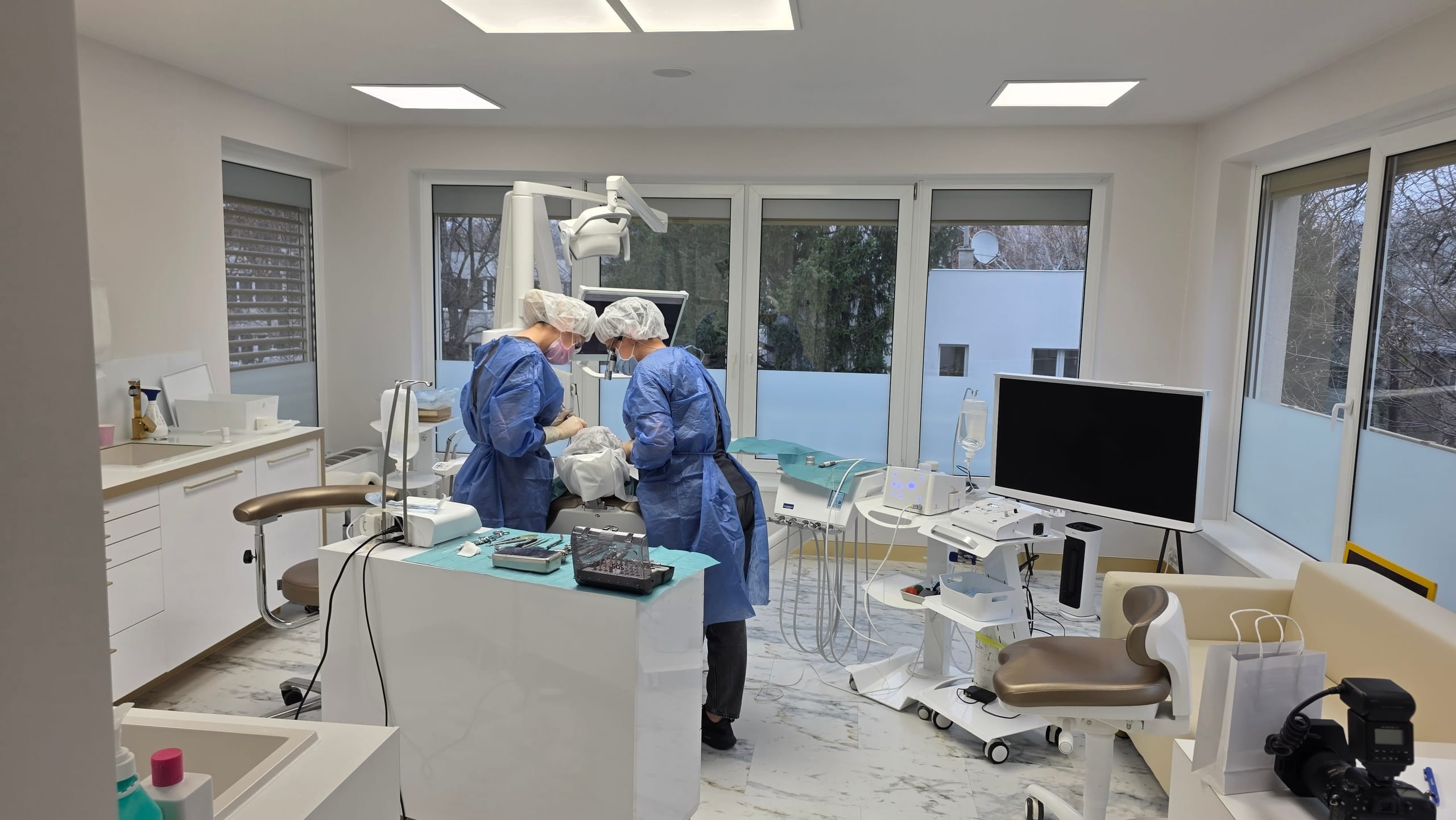
Every ceramic implant placement follows our proven biological protocol — combining advanced digital planning with body-wide health optimization.
3D CBCT imaging, biocompatibility testing, and biological readiness evaluation
Duration: 1–2 visits
Optimizing your body's healing capacity before surgery
Duration: 2–6 months if needed
Precise, gentle surgery using advanced protocols
Duration: 1–2 hours per implant
Crown placement after complete implant integration
Duration: 4–6 months total
Typical Total Timeline
Ideal
Immediate implantation when extracting a tooth
Good
4–6 months post-extraction with proper healing
Challenging
Longer delays may require bone grafting
Premium Systems
We exclusively work with CleanImplant-certified manufacturers — systems proven for purity, biocompatibility, and clinical excellence.


Two-piece hybrid system + One-piece monobloc implants
Key Features:
Ideal for:
Complex cases requiring multiple options, immediate implant placement with Dynamic Thread design, and immediate loading (same day temporary crown).



Two-piece screw-retained system
Same Core Implant System — Two Manufacturers
Key Features:
Ideal for:
Challenging cases with poor bone density or thin mucosal biotype. Ideal when simultaneous bone grafting is needed — place implant and graft in one procedure. Perfect for patients requiring proven titanium-alternative performance with extensive clinical documentation.
Each system has unique advantages, and we select based on your specific clinical situation, aesthetic demands, and biological factors. Experience teaches the subtle art of matching system to patient.

Send us your X-ray — we'll tell you what's possible.
Suitability
Most people qualify for ceramic implants. Our comprehensive assessment ensures we prepare you optimally for long-term success.
Vitamin D & Minerals
Low levels must be corrected pre-surgery. We test and supplement as needed for proper osseointegration.
Bone Quality
We evaluate using 3D CBCT imaging. Insufficient bone requires grafting (4–6 months healing) before implant placement.
Systemic Health
Uncontrolled diabetes, active cancer treatment, or certain medications may delay treatment until optimized.
Bruxism (Teeth Grinding)
Requires careful case selection, proper occlusion adjustments, and custom nightguards for long-term protection.
Smoking
Significantly impacts healing. We require cessation during critical healing phases for optimal success.

Our comprehensive assessment goes beyond basic dental evaluation. We analyze your body's readiness — bone quality, nutrient levels, systemic health markers — to ensure optimal conditions for lasting integration. This is biological dentistry in action.
Most patients qualify Thorough pre-screening Personalized preparation
Transparent Pricing
Transparent pricing for complete ceramic implant solutions. No hidden costs, no compromises on quality.
USA
$5,000–8,000
per tooth (complete)
Western Europe
€4,000–6,500
per tooth (complete)
Budapest, Hungary
€2,460–2,610
per tooth (complete)
Includes: Implant + Abutment + Crown
Same quality, better value
3D CBCT imaging, digital planning, surgical guides
SDS, NobelPearl, or Zeramex ceramic system
Minimally invasive protocols with PRF therapy
High-quality ceramic restoration
Ceramic implants typically cost 10–20% more than standard titanium implants. But here's what most people don't know: high-quality titanium implants with advanced surface treatments cost nearly the same as ceramic.
The real difference? Ceramic offers biological advantages that metal simply cannot replicate — superior soft tissue response, zero corrosion risk, electromagnetic neutrality, and enhanced bacterial resistance.
Our 5-year warranty covers the implant, its abutment and the crown on it — and for SDS and Zeramex implants, the manufacturer also gives the clinic a lifetime replacement warranty on the implant, on its own terms.
"Ask anyone who's had a titanium implant crown removed about the smell. That's bacteria living inside the implant — something you'll never experience with ceramics."
Bone Grafting
If needed:
+€500–1,000
depending on extent
Extraction
If required:
+€150–220
per tooth
Soft Tissue Grafting
Aesthetic area if required:
+€700
Every case is different. Send us your scan for a personalized cost estimate — no obligation.
Get Your EstimateSetting the Record Straight
Separating outdated information from clinical reality based on extensive clinical experience.
Myth: "Ceramic implants are weaker than titanium"
Fact
Modern zirconia ceramic implants have comparable strength to titanium. With proper case selection and surgical technique, success rates match titanium at 95–98% over 10+ years.
Myth: "Ceramic implants are experimental with limited research"
Fact
Ceramic implants have over 20 years of clinical documentation. Studies show comparable osseointegration to titanium, with additional benefits including superior soft tissue response and reduced bacterial adhesion.
Myth: "All ceramic implants are one-piece only"
Fact
Modern ceramic implant systems include both one-piece and two-piece designs. NobelPearl, Zeramex XT, and SDS all offer two-piece systems with screw-retained or cemented restorations.
Myth: "Zirconia is a metal, so ceramic implants contain metal"
Fact
Zirconia (zirconium dioxide) is a ceramic oxide compound, not a metallic element. It's as much a "metal" as table salt contains sodium metal. Ceramic implants are completely metal-free.
Myth: "You can't do immediate loading with ceramic implants"
Fact
With proper primary stability, bone density, and case selection, immediate loading protocols work well with ceramic implants. What matters is surgical technique and understanding osseointegration principles.
Myth: "Ceramic implants are only for front teeth"
Fact
We place ceramic implants successfully throughout the mouth, including full-arch reconstructions. With proper case selection, ceramic implants perform excellently in high-load posterior areas.
Most "limitations" of ceramic implants come from outdated information or inexperienced practitioners. With proper training, case selection, and surgical protocols, ceramic implants deliver excellent long-term results while offering biological benefits titanium cannot match.
Not sure if ceramic implants are right for your situation? Share your case — we'll give you an honest answer.
Get Your EstimateFAQ
Expert answers from specialized ceramic implant practitioners.
How long do ceramic implants last?
With proper care and maintenance, ceramic implants can last a lifetime. Clinical studies show 95–98% success rates over 10+ years, comparable to titanium. Our 5-year warranty covers the implant, its abutment and crown, and for SDS and Zeramex implants the manufacturer also gives the clinic a lifetime replacement warranty on the implant, on its own terms.
How long does the ceramic implant process take?
The complete process typically takes 4–6 months from initial assessment to final crown placement. This includes biological preparation, surgical placement, and healing time for osseointegration. Immediate loading (same-day temporary crown) is possible in ideal cases.
Do ceramic implants feel different from natural teeth?
Once fully integrated and restored with a ceramic crown, implants feel and function like natural teeth. The ceramic material's biocompatibility means your gums respond naturally, often with better soft tissue health than around titanium implants.
Can anyone get ceramic implants?
Most people qualify for ceramic implants. We assess bone quality, vitamin D levels, systemic health, and lifestyle factors during our comprehensive biological evaluation. Conditions like diabetes or smoking are manageable — we optimize patients to appropriate levels before treatment. However, bisphosphonate therapy, certain cancer treatments (chemotherapy/radiation), and specific medications may exclude or significantly delay implant placement.
What makes your practice different for ceramic implants?
Ceramic implants are not a sideline for us — they are all we place. We don't offer titanium as an alternative. This specialization means deeper expertise in case selection, surgical technique, and biological protocols specific to ceramic materials.
How do I care for ceramic implants?
Care is the same as natural teeth — regular brushing, flossing, and professional cleanings. Ceramic's lower bacterial adhesion actually makes maintenance easier. We recommend check-ups with our hygiene team regularly, depending on each patient's situation.
What if I grind my teeth (bruxism)?
Bruxism doesn't disqualify you from ceramic implants. It does require careful case selection, proper occlusion adjustments, and custom nightguards for long-term protection. We thoroughly assess bite forces and plan accordingly to ensure implant longevity.
Are ceramic implants safe for people with autoimmune diseases?
Ceramic implants are often the preferred choice for autoimmune patients. Zirconia's complete biocompatibility means zero metal ion release, no galvanic currents, and no electromagnetic interference — reducing potential immune triggers that metal implants may cause.
Get Started
Send us your case. We'll send you an honest clinical evaluation — not just a price list.
FREE · 5 MINUTES · FROM HOME
We'll review your case personally and reply within 3 working days with what we see, what's likely possible, and honest next steps — even if that means we're not the right fit.
What to send
info@johannadental.com
See the full journey — from first email to treatment in Budapest →
No commitment at any stage. You decide if and when to take each step.
Prefer to call? +36-1-701-2900 info@johannadental.com