



Prof. Markus Hürzeler & Dr. Otto Zuhr
Advanced periodontal & microsurgical training
Advanced postgraduate training in periodontal plastic surgery, soft-tissue management and microsurgical techniques.

Biological Dentistry in Budapest
Finally. Biological principles meet clinical excellence in the same chair.
We are a 100% metal-free practice in Buda: no amalgam, no metal-ceramic, no titanium. This page explains the method behind that decision, the credentials behind the method, and the limits of both.
7,500+
patients
100%
metal-free
20+
years
Advanced education through leading institutions and direct training with internationally recognised clinicians shapes the way we diagnose and treat — not simply the techniques we offer.


Advanced periodontal & microsurgical training
Advanced postgraduate training in periodontal plastic surgery, soft-tissue management and microsurgical techniques.
Advanced periodontal training
Multiple advanced courses in periodontology, periodontal surgery and regenerative periodontal treatment.
Advanced surgical training & ARENA accreditation pathway
Advanced training in the ARENA protocol and the diagnosis and surgical management of jawbone pathologies.
This isn't alternative medicine. It's dentistry that acknowledges biology.

Advanced 3D imaging shows infections a conventional X-ray cannot — more often than most patients expect.

SMART-certified protocols, 100% metal-free materials, and biocompatibility testing for every substance that enters your body.

Natural protocols like your own growth factors (PRF) and ozone therapy — not just fixing problems, but supporting your recovery.
Biological dentistry begins with a simple principle: your mouth is part of your body.
We consider not only how a treatment works mechanically, but also how infection, inflammation, dental materials and surgery may influence healing and the tissues around them. Every material we place and every procedure we perform is considered in its wider biological context.
This is not alternative medicine. It is dentistry that takes biology, biocompatibility and long-term health into account alongside function and mechanics.

In her own words
I did not set out to build a metal-free practice. I set out to stop explaining away symptoms I could not account for — the patient whose fatigue lifted after we took out a tooth I had been told to leave alone, the reaction to a crown that was supposed to be inert.
So we chose an exclusive metal-free path and stuck to it. That decision cost us. We turned away cases other practices would have accepted, because taking them would have meant placing something I no longer believed in. We had to learn different materials, different techniques and different laboratories, and for a while we were slower and more expensive than we needed to be.
The test I use has not changed. When I write a treatment plan, I stop at every line and ask: would I have this done on myself? Not in theory — in this chair, with this material, this week. If the answer is no, it does not go in the plan. And if something is to come out, the patient needs a reason they understand and have chosen, not my conviction.
Specialisation is not a marketing position. It is the reason we can do this properly.
Dr. Johanna Malita, DMD
Training, explained
A logo alone tells you very little. Here is what each qualification or training involved — and, more importantly, how it changes the way we care for you.
Formal certification
What it is
The IAOMT's Safe Mercury Amalgam Removal Technique — a defined protocol designed to reduce mercury exposure for the patient, clinical team and treatment environment during amalgam removal.
What it required
Dedicated mercury and amalgam-removal education, scientific study, testing, clinical training and learning the specific protective measures and equipment required by the SMART protocol.
What it means for you
When we remove amalgam, it is not treated like an ordinary filling replacement. We follow a defined exposure-reduction protocol using isolation, high-volume suction, clean air and additional protective measures.
Formal accreditation
What it is
An advanced IAOMT qualification in biological dentistry that goes beyond SMART and covers the wider relationship between dental materials, oral disease and biological compatibility.
What it required
SMART certification first, followed by an extensive biological-dentistry curriculum, scientific literature review, examinations and continuing professional education.
What it means for you
Our biological approach is grounded in structured postgraduate education. Material compatibility, periodontal health, root-treated teeth and jawbone findings are considered as parts of a wider clinical picture.
Advanced clinical training
What it is
Advanced education in ceramic implantology and biological dentistry within the SDS system, including direct training with Dr. Karl Ulrich Volz, who developed the SDS ceramic implant concept.
What it required
System-specific postgraduate training in ceramic implant planning, surgical protocols, biological principles and the clinical use and restoration of SDS zirconia implants.
What it means for you
When we use ceramic implants, they are not treated simply as metal-free versions of titanium implants. Planning, placement and restoration follow principles developed specifically for zirconia implantology.
Structured postgraduate education
What it is
Structured postgraduate education in Complete Dentistry — bringing together the bite, jaw joints, muscles, tooth position, aesthetics and restorative treatment planning.
What it required
A progressive curriculum in examination and records, occlusion, treatment planning and comprehensive restorative care, with each stage building on the previous one.
What it means for you
A broken crown is not automatically treated as an isolated crown problem. We first ask whether the bite, function or underlying structure contributed to the failure before deciding how it should be rebuilt.
Advanced continuing education
What it is
Advanced restorative and treatment-planning education built around comprehensive diagnosis and Spear's Facially Generated Treatment Planning approach.
What it required
Ongoing advanced education in diagnosis, occlusion, restorative design, aesthetics and the planning and sequencing of complex treatment.
What it means for you
We do not plan a complex smile tooth by tooth. We first consider the face, function, bite and long-term restorative needs, then work backwards to the individual treatment steps.
Master Clinician programme
Hürzeler / Zuhr Academy
What it is
The complete Hürzeler/Zuhr Master Clinician curriculum in Periodontology and Implant Therapy, led by Prof. Markus Hürzeler and Dr. Otto Zuhr.
What it required
Completion of the full multi-module Master Clinician programme, combining advanced periodontology, implant therapy, live surgery and intensive hands-on training in microsurgical soft- and hard-tissue reconstruction.
What it means for you
When gum or bone reconstruction is needed, treatment is planned around tissue biology, wound stability and microsurgical precision — not simply around adding more graft material.
Direct postgraduate training
Periodontology & Regenerative Surgery
What it is
Advanced direct training in periodontology and periodontal surgery with Prof. Anton Sculean, Chairman of the Department of Periodontology at the University of Bern.
What it required
Multiple advanced courses in periodontal diagnosis, regenerative surgery, soft-tissue treatment and contemporary periodontal techniques rather than a single lecture or one-off course.
What it means for you
Gum treatment is staged. We first control inflammation and biofilm; surgery is reserved for situations where it is actually indicated, with regenerative or soft-tissue procedures selected according to the individual defect.
Advanced clinical training
ARENA Protocol® & Regenerative Oral Surgery
What it is
Advanced regenerative oral-surgery training with Prof. Shahram Ghanaati, including the ARENA Protocol®, Guided Open Wound Healing and the assessment and management of compromised post-extraction jawbone healing.
What it required
A structured clinical education programme combining direct teaching, surgical training, mentored clinical implementation and documented case evaluation.
Clinical certification is currently being completed.
What it means for you
Jawbone findings are assessed within a structured diagnostic and case-selection process. When surgery is indicated, treatment follows a defined regenerative workflow rather than simply removing abnormal-looking bone.
Training is only half of it. Our rooms are equipped to the same standard — imaging, magnification, lasers and ozone are all in-house — and every instrument is packaged and sterilised individually, including those for routine fillings.


The method
Biological dentistry is not defined by a single material, product or procedure. It is a way of examining patients and of planning and performing dental treatment that considers function, structure, biology and aesthetics, while recognising that oral health is an integral part of the patient's overall health.

Every treatment at Johanna Dental begins with a 90-minute comprehensive examination, conducted by Dr. Johanna Malita.
Diagnosis carries the greatest weight of clinical judgement, so it is not delegated. Dr. Johanna assesses each patient across four areas before any treatment is proposed: function (jaw joints, muscles and bite), structure (the condition of the teeth), biology (gums, infections and their systemic implications) and aesthetics.
The examination includes a 3D CBCT scan, clinical photographs and complete diagnostic records, reviewed together with you. Correlating these findings with your symptoms and history is where experience matters most. You leave with a written summary of the findings and an individualised treatment plan, with priorities and sequence set out clearly.
"You don't know what you can't see." — Dr. Johanna Malita
In practice

We treat the cause of a problem, not only its visible result, so that the same damage does not recur.
When teeth show wear, the restoration is only part of the answer. If the underlying bite or functional problem is not identified and, where necessary, corrected, the same forces continue to act. With today's durable materials, an overlooked cause may leave the restoration intact and damage a neighbouring tooth or structure instead.
The same principle applies to infection around a tooth root. Beyond the local finding, we assess the demands on the patient's body and whether a chronic condition may be contributing, because a root canal treatment performed or repeated in isolation may not sufficiently reduce the burden on the immune system. This wider view determines the order of treatment: what is urgent, what can follow and what can reasonably wait.
In practice

What goes into the body matters, so every material we use is chosen for biological compatibility first.
Almost any material placed in the mouth remains foreign to the body. Our aim is therefore to work with materials that are as clean, inert and well tolerated as possible. Fillings require the most careful judgement, because physical strength and biological compatibility have to be balanced: with monomer-based materials, greater durability can mean less desirable components. We use highly biocompatible filling materials for all our patients.
Ceramic implants are biologically inert and well tolerated by bone and soft tissue; ceramic crowns and inlays offer the same compatibility for restorations. Laboratory testing of material compatibility is not needed for most patients. We recommend blood-based testing selectively, for patients with multiple sensitivities or serious medical conditions, rather than as a routine step.
In practice

Healing support is not something added after surgery; it begins with how carefully the procedure itself is performed.
In a tooth extraction, support for healing starts before the tooth is removed: the periodontal ligament and gingiva are detached carefully, the tooth is sectioned where necessary, and the extraction is kept atraumatic. Where a flap is required, the position, direction and depth of the incisions influence healing, as does the suturing technique and the way the tissues are brought together. A biological extraction therefore takes longer than a routine one, because each of these steps takes time.
On that surgical foundation, further measures can support healing. PRF is prepared from the patient's own blood and carries the patient's own cells and healing factors. Synthetic bone-grafting materials are chosen to be gradually replaced by the patient's own bone. Adjuncts such as vitamin C, low-level laser therapy (photobiomodulation), ozone therapy and targeted supplementation are used where they can support recovery.
"Healing begins with the time, care and precision invested during the procedure." — Dr. Johanna Malita
In practice

A lasting result depends less on the implant or crown itself than on how the treatment is planned, sequenced and performed.
Long-term thinking begins at the planning stage: what we do, how we do it and in what order. A durable result requires an understanding of function, structure and biology, with the treatment considered as a whole and as part of the patient's general health. Our Excellence Programme and warranty programme, each with its own terms, are the visible expression of this; the substance behind them is clinical judgement built over years of practice.
The same zirconia crown or ceramic implant is available to any clinician. What determines the outcome is how the case is planned, how the implant is positioned, how the bone is prepared, how the surgery and suturing are performed, and how the patient is prepared and supported before and after. That judgement has been shaped by continuous training with clinicians such as Prof. Markus Hürzeler, Dr. Otto Zuhr, Prof. Anton Sculean or Prof. Shahram Ghanaati.
In practice
Everyday dentistry
Not every case needs implants. Most of our work is everyday dentistry, done with the same biological standard: preserve the tooth first, use biocompatible materials, keep the intervention minimal. What we do not offer: amalgam fillings, metal-ceramic crowns or titanium implants.

All-ceramic zirconia and e.max restorations, from a single crown to a full arch, with no metal substructure and no grey line at the gum.

Tooth-coloured, BPA-free composite restorations chosen for biological compatibility, with no mercury and no metal, for front and back teeth alike.

Pressed-ceramic restorations bonded to the tooth, so a large filling or a broken cusp is rebuilt while more of your own tooth is kept.

Guided Biofilm Therapy with EMS AIRFLOW, ozone and adjunct laser: thorough biofilm removal with low abrasion, for healthy gums, periodontitis and implant maintenance.

Biological extraction technique: careful detachment, sectioning where needed, PRF from your own blood and ozone, aimed at preserving bone and supporting healing.

Metal-free zirconia implants for single teeth, bridges and full arches, planned and placed to protocols developed specifically for ceramic implantology.
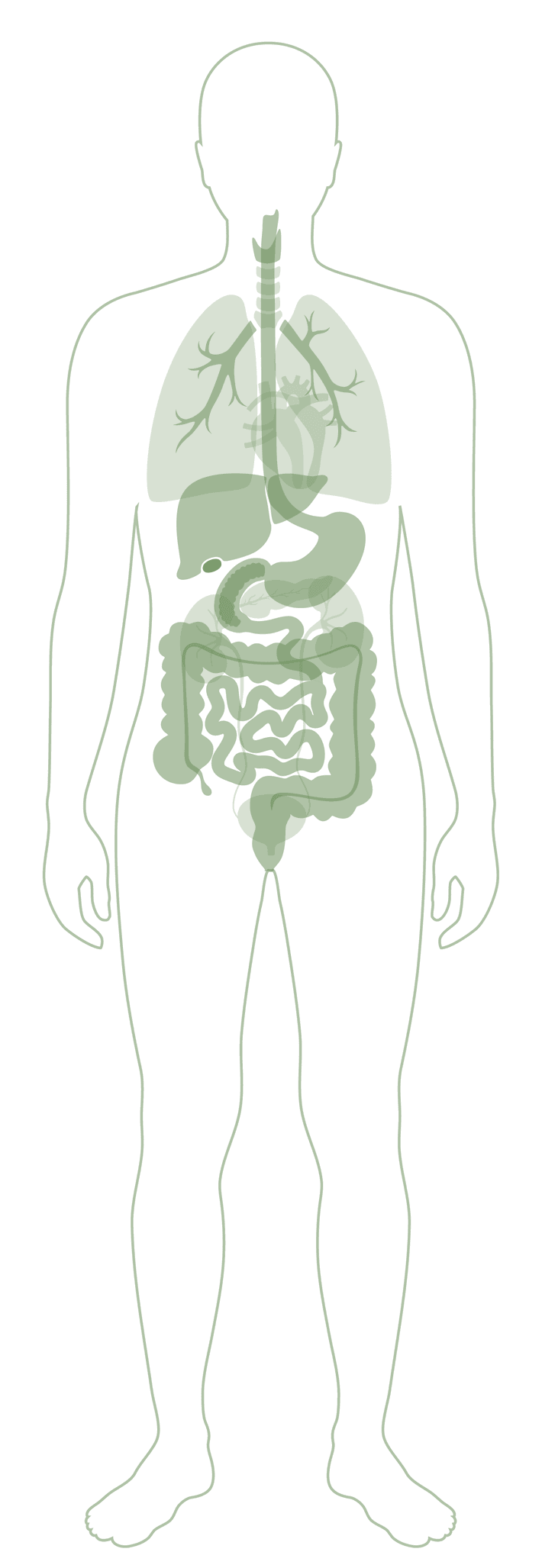
Your Mouth: The Gateway to Your Body
Conventional dentistry treats the mouth as separate from the body. But the science tells a different story:
Gum disease bacteria have been detected in brain tissue
Increased pneumonia risk, particularly in older and hospitalised patients
Oral bacteria detected in arterial plaques
Periodontal disease linked to higher pancreatic cancer risk in large cohort studies
Associated with gum disease — researchers are investigating why
Higher risk with periodontal disease across many studies
Higher risk with periodontal disease; causality not established
A two-way link: each condition makes the other harder to control
Associated with pre-eclampsia and low birth weight
Higher mortality where diabetes and gum disease occur together
These are associations documented in research — and association is not the same as cause. What it means for you is narrower and more useful: an untreated infection in your jaw belongs in the picture your doctor and your dentist look at together.
Frequently asked
Take the next step
FREE · 5 MINUTES · FROM HOME
We'll review your case personally and reply within 3 working days with what we see, what's likely possible, and honest next steps — even if that means we're not the right fit.
What to send
info@johannadental.com
See the full journey — from first email to treatment in Budapest →
No commitment at any stage. You decide if and when to take each step.
Prefer to call? +36-1-701-2900 info@johannadental.com